When you buy through Plein & Pan links, we may earn an affiliate commission at no extra cost to you. How Plein & Pan affiliate links work
As urban sketchers and plein air painters, we are constantly engaged in a silent negotiation with weight, space, and drying times. Every gram in our pack must justify its presence. When choosing a color medium for your travel sketchbook, the decision almost always comes down to two beloved siblings: transparent watercolor and opaque gouache.
While they share a similar chemical foundation—pigment bound with gum arabic—their behavior on the page, and their ergonomics in the field, could not be more different. One is a master of luminous, quick-drying layers; the other offers bold, graphic opacity that lets you paint light over dark. Let's dissect how they perform when you are sitting on a park bench, in a bustling café, or on a windy hillside, so you can choose the setup that matches your creative workflow.
The Technical Reality: Transparency vs. Opacity
Understanding how these mediums dry and reactivate is crucial for field sketching:
- Watercolor relies on the white of your paper to reflect light back through transparent layers of pigment. It is highly forgiving of quick packing because dry pans rewet instantly with a drop of water.
- Gouache is essentially opaque watercolor. Because it contains larger pigment particles or added opacifiers (like chalk), it dries to a flat, velvety, matte finish. This allows you to paint light colors over dark colors—a massive advantage if you love painting on toned paper or want to correct mistakes easily.
The Travel Catch with Gouache
While gouache is incredibly expressive, traveling with it requires some technical compromise. When gouache dries in a palette, reactivating it with water inherently dilutes its opacity. As noted by experienced outdoor painters at The Fearless Brush, adding too much water to dry gouache makes it behave like chalky watercolor, defeating its primary purpose. Furthermore, cheap or student-grade gouache tends to crack, crumble, and fall out of travel pans when completely dry. To maintain its creamy consistency, artists often use airtight palettes, mix in a drop of glycerin, or use tiny, fresh dollops of paint in micro-palettes.
Field Ergonomics & Water Management
In the field, watercolor is the undisputed champion of low-maintenance sketching. You need very little water, your brush cleans with a simple swish, and the paint dries fast enough to close your sketchbook without sticking.
Gouache, on the other hand, demands active water management. To keep your colors clean and opaque, you must wash your brush thoroughly between mixes. It also takes slightly longer to dry on the page when applied thickly, meaning you must wait before closing your book to avoid gluing your pages together.
| Feature | Travel Watercolor | Travel Gouache |
|---|---|---|
| High (luminous, relies on paper white) | Opaque (matte, covers layers beneath) | |
| Instant and smooth | Requires patience; loses opacity when diluted | |
| Best on white watercolor paper | Excellent on white, toned, or dark paper | |
| Minimal | Moderate to high (to keep brushes clean) | |
| Very fast (thin washes) | Fast, but thicker layers take longer |
Choosing Your Travel Gear
Depending on your preference for transparency or opacity, your physical palette needs will change. Here are three distinct options that highlight these differences in practice.
1. The Classic Watercolor Solution
For most sketchers, a dedicated, folding pan set represents the sweet spot of field ergonomics. With multiple solid colors, built-in mixing wells, and a protective outer shell, it allows you to lay down broad transparent washes and pack up in seconds without worrying about paint leaking or crumbling.
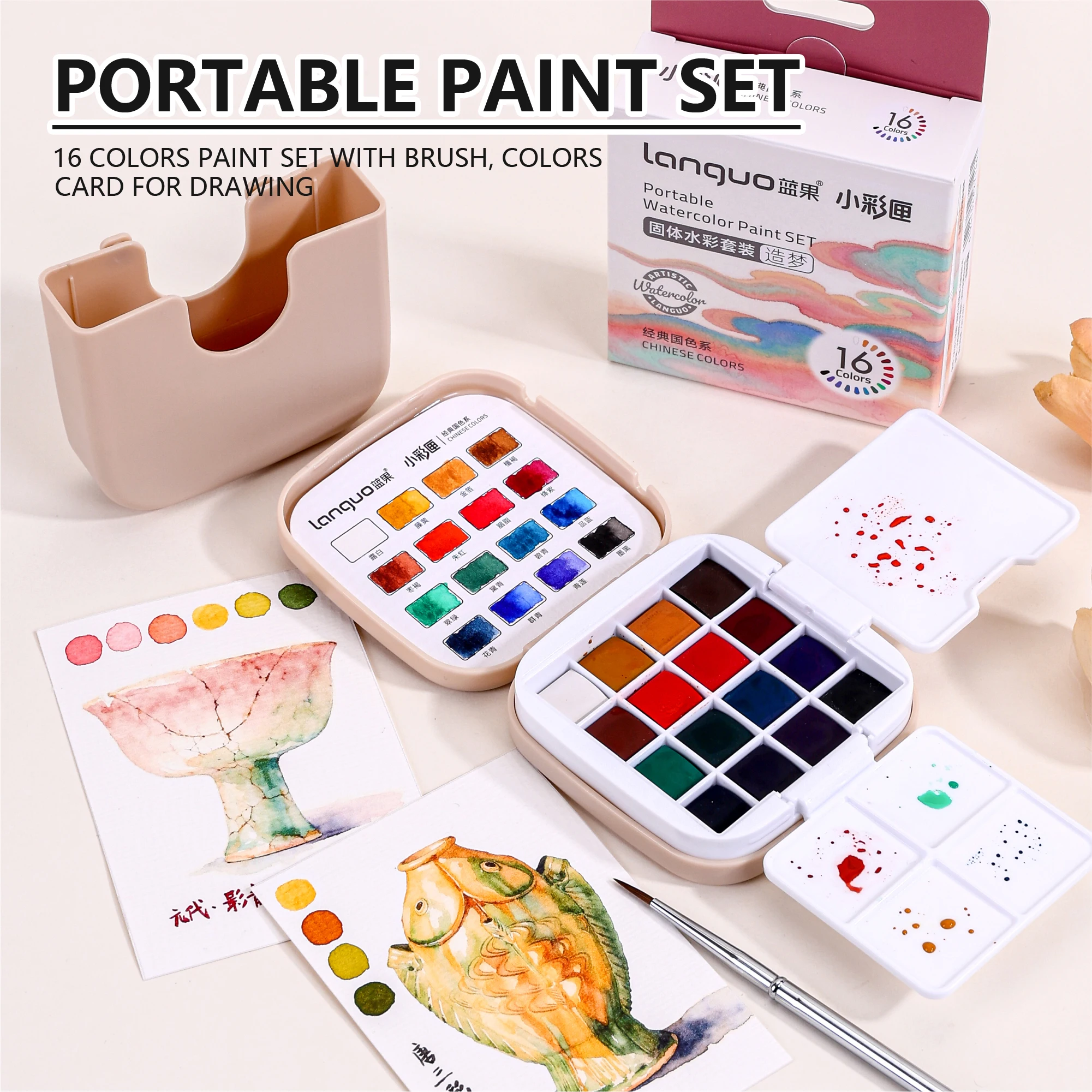
2. The Micro-Gouache & Watercolor Companion
If you prefer the velvety texture of gouache or want an ultra-minimalist setup, a micro-palette offers an incredibly tactile, aesthetic solution. Crafted from warm walnut wood, this micro-palette is designed to clip directly to your sketchbook. Because the wells are small, it is perfect for squeezing in fresh, moist gouache for a single afternoon session, bypassing the crumbling issues of large dry pans.

3. The Ultra-Light Entry Point
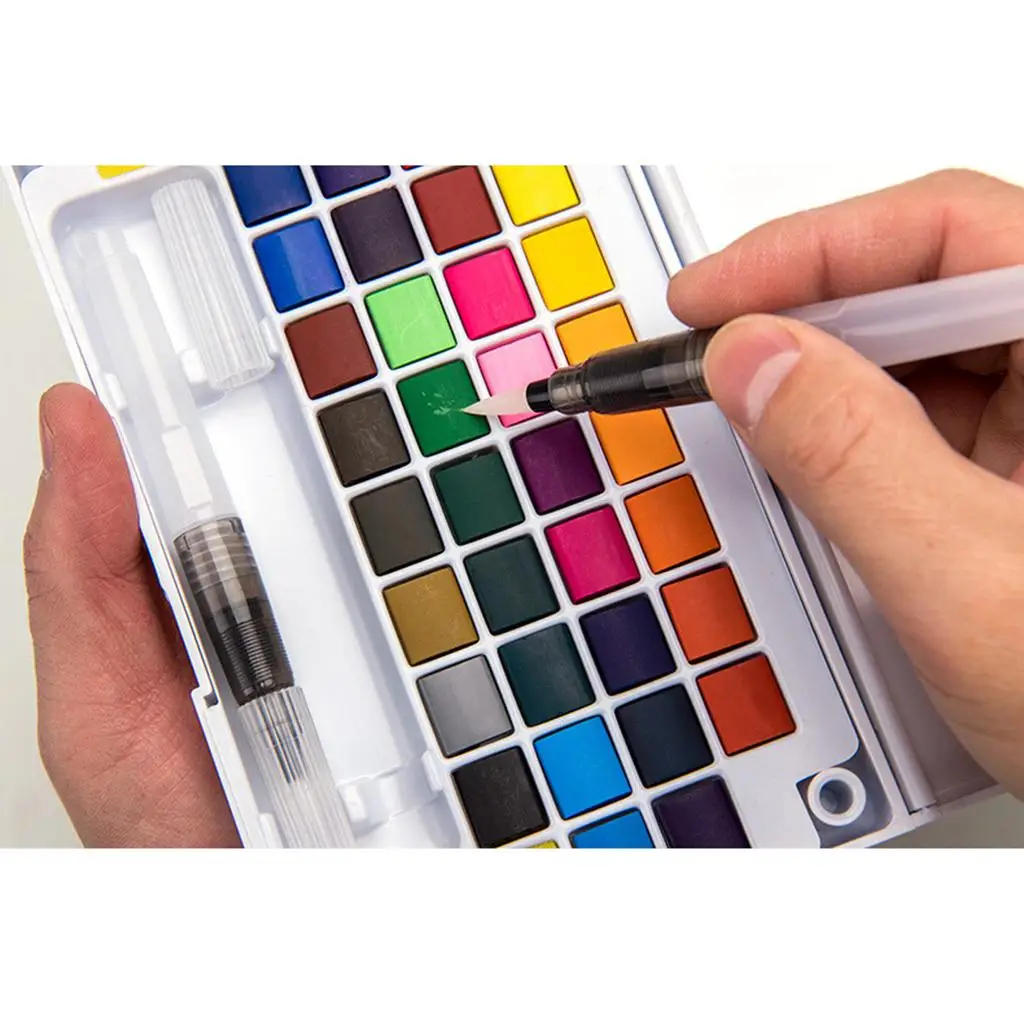
For those who prioritize keeping their pack as light and inexpensive as possible, a streamlined, budget-friendly entry point is ideal. Complete with a water brush—which eliminates the need for a separate water cup—it is a highly functional pocket kit for quick, spontaneous color notes.
The Hybrid Approach: The Secret Weapon
If you cannot decide between the two, you do not have to. Many seasoned plein air artists, such as those featured at Igayah Art, carry a standard travel watercolor palette and supplement it with a single tube of high-quality white gouache.
By mixing a touch of white gouache into your transparent watercolors, you can instantly turn them into opaque pastel tones, allowing you to paint highlights, clouds, or sea foam directly over dark washes. This hybrid setup gives you the best of both worlds: the effortless portability and instant rewetting of dry watercolors, combined with the graphic flexibility of gouache.
The Verdict: Which Should You Pack?
Choose Travel Watercolor if:
- You want a low-maintenance, fast-drying setup that packs away in seconds.
- You love luminous, layered washes and want to preserve the natural white of your paper.
- You sketch in fast-paced environments (trains, cafés) where water cups are easily spilled.
Choose Travel Gouache if:
- You prefer a bold, graphic, poster-like painting style with a matte finish.
- You enjoy painting on toned, kraft, or dark paper.
- You want the freedom to paint light colors over dark colors and easily correct mistakes.
- You don't mind carrying a bit more water and managing a slightly more delicate palette setup.